2019 · Lviv · Виставки
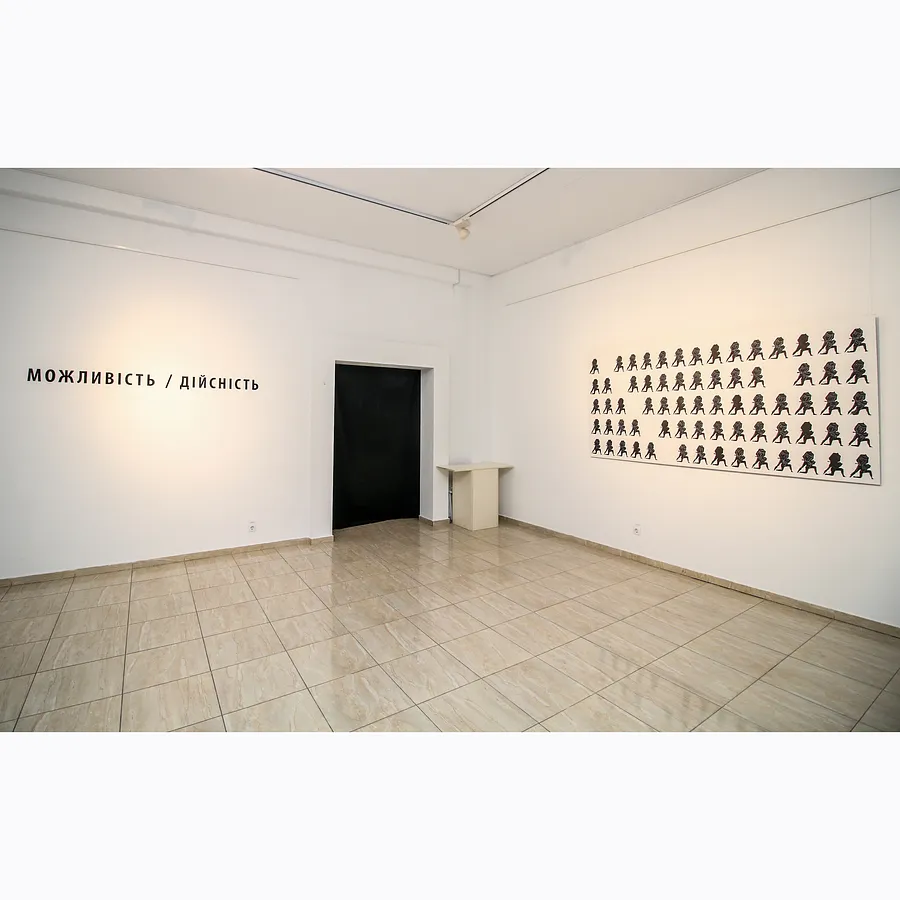
Possibility / Actuality
Aristotle - Potentiality and Actuality: Entelechy
The introduction and development of these categories represent one of Aristotle's most significant contributions to the development of
philosophical thought. Thanks to them, the Stagirite was able to concisely present the process of becoming
being, to show the interrelation of matter and form not as a static correlation of two
principles, but as mutually conditioned moments of development. Matter, since without form it is nothing
definite, is only the potentiality for something to be. In other words, it contains within itself the potential
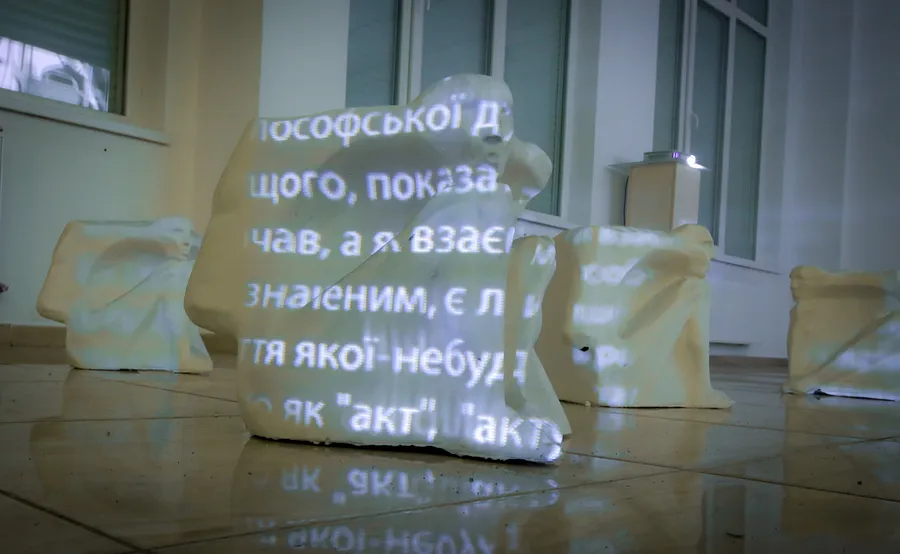
being of some thing ("potentia" - Latin calque of the Greek word "dynamis" - "potentiality"; just
as "act," "actuality" are the Latin equivalents of the Greek "energeia" - "actuality"). The action
of form allows this potentiality (possibility) to be realized, as a result of which a real - actually
existing - thing arises.
The embodiment of the possible into actuality is also expressed by Aristotle through the concept of "Entelechy." One can
say that Entelechy is the essence of a thing, towards which, as its goal and calling, its existence is directed and determined.
The concept of entelechy allows us to understand actuality not simply as existing being, but as
a realized potentiality, as an accomplished goal of the being of one thing or another. Thus, Aristotle speaks
of the soul as the entelechy of the body, seeing in it the force that determines the actuality of a human being. In light
of this, the form of forms appears as a being in which any potentiality is absolutely absent.
It is entirely active and actual: that is, in the form of forms, nothing exists as a potentiality, but only and
exclusively as actuality, as something accomplished.